
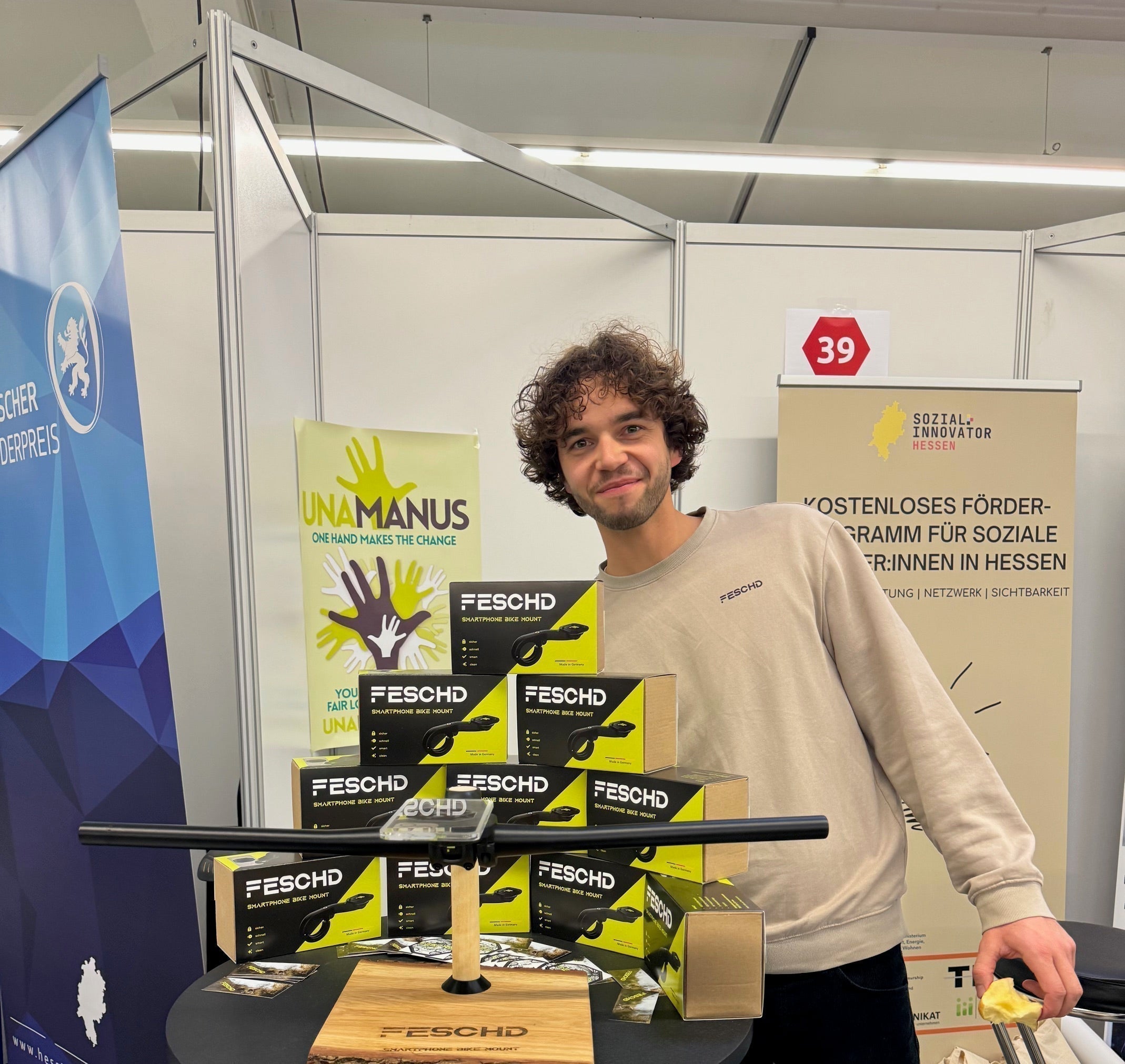
FESCHD founder Simon in an interview: You have to enjoy what you do!
Regarding the founding story: How did the idea for FESCHD come about? Was there a specific moment when you knew – this is what I want to do?
Yes, I've always been a keen cyclist , and it's long annoyed me how fiddly, wobbly, and cumbersome the phone mounts on the market are. Back then, I thought to myself, "This has to be quick, safe, and easy, and somehow look elegant on my racing bike," and that's when I started working on my own idea.
What was the biggest challenge you had to overcome in building the company at the beginning?
For me, the biggest challenge was actually just getting started and finding the beginning, because you're faced with a huge mountain and you don't really know where to start or what the next steps are. Taking that first step, then the second, and finally realizing you're standing on the mountain, having managed to tackle one thing after another. But I think those first steps are truly the hardest, because at the beginning, you can be completely overwhelmed by everything that needs to be done. And then you have to grapple with all the questions like: "What kind of legal structure is this?" and "What legal aspects do I need to consider?", "How do I market my product?", "How do I sell it?", "How do I find a production facility?", "How do I package it?", and so on. It's probably best to put all these questions aside for now and then find solutions step by step when the time comes.
Was there a point where you doubted yourself – and how did you motivate yourself again?
I can definitely confirm that you always reach those points where there are setbacks, where things get difficult, where you don't know what to do next. Where you might even want to give up. But what motivated me, I think, is simply the joy of the activity itself. And the fact that you simply have to enjoy what you're doing. Otherwise, you'll quickly give up. But if you enjoy it and have fun with it, then you're happy to keep going, and so one thing always led to another and somehow motivated me to stick with it, because in the end, everything always worked out in the end.
What values or philosophy were central to your founding from the very beginning?
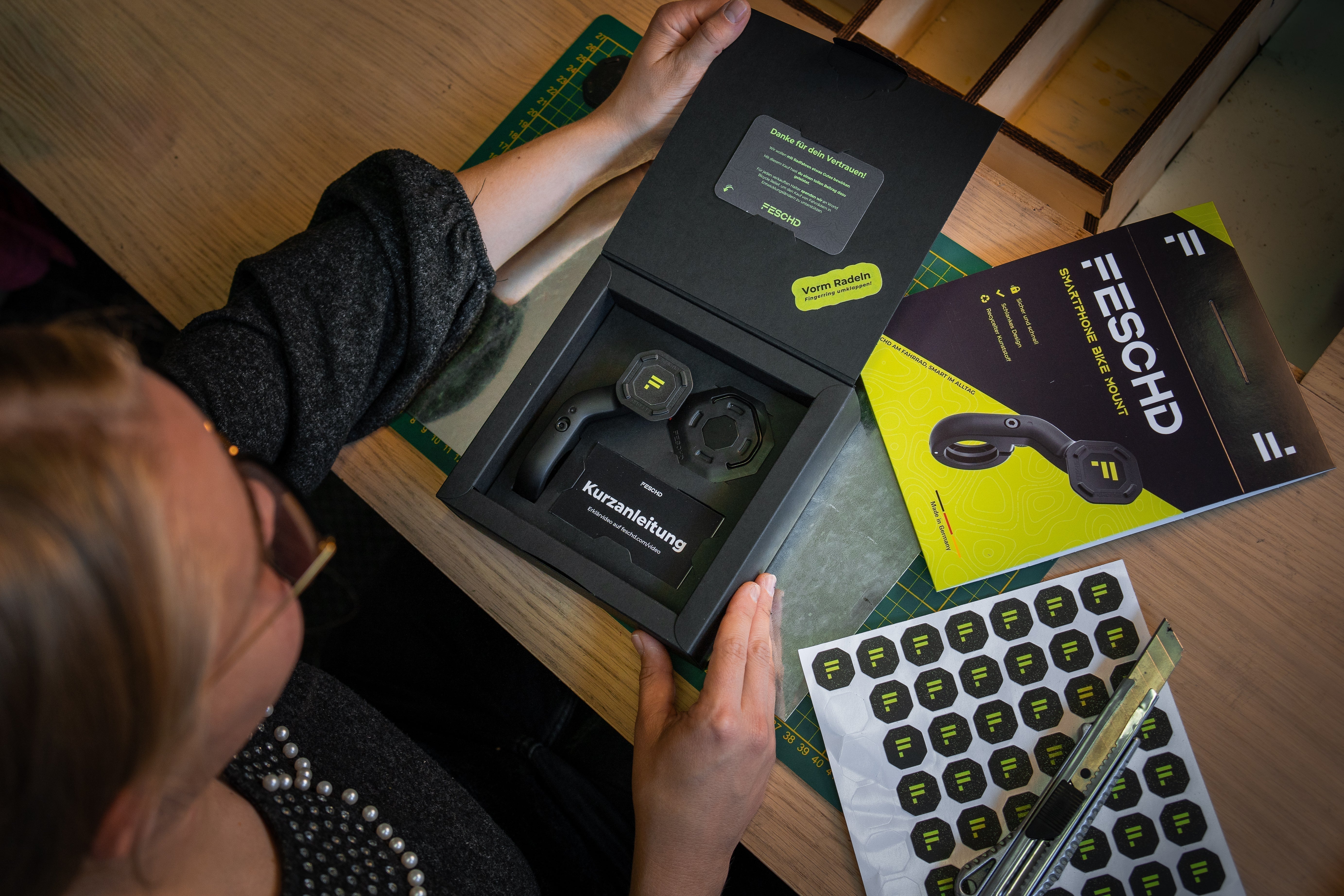
A key principle I set for myself right from the start was to establish this: We want to use a good idea to do good. The idea wasn't simply to make as much money as possible, but to ask: How can we implement and bring to the world an idea that inspires people to cycle, but also makes cycling possible for others? And that's why we decided to use the profits to finance bicycles for people in developing regions. We want to produce FESCHD in Germany, as locally and sustainably as possible. That's why we make the holder from recycled plastics and the packaging from paper. We want to act locally, sustainably, and with a purpose.
Regarding the product and its development:
What did the first prototype of your mobile phone holder look like – and what was the biggest lesson learned from this early phase in retrospect?
Looking back, the biggest lesson from that initial phase was the need to further develop and modify the initial product with its sliding mechanism and spring-loaded click. The first prototype failed the practical test because it was much more difficult to use and generally far too delicate. And that's where I quickly learned: it had to be something really robust and very simple. And I think the biggest lesson was not just focusing on your own ideas and what you personally find appealing, but getting out there as quickly as possible and asking real customers and real people. We visited cyclists, professional cyclists, and bike shops, simply walking in, presenting the product, and asking for feedback. That's how a new prototype came about, and we were able to further develop FESCHD. That was my biggest lesson: not just to brainstorm my own ideas, but to constantly optimize the product with real cyclists.
What steps were necessary to turn an idea into a market-ready product?
I'm a mechanical engineer, so I know how to build prototypes, sketch out an idea, convert it into CRD, print 3D parts, and so on. But actually turning that into a mass-produced product was a huge step. You have to find the right companies, secure financing, and explore partnerships and collaborations so you can move into mass production with the complex manufacturing processes. Then, of course, you have to build the entire website, the packaging, sales, and all the marketing. That's when I sought help, when my co-founder Mike joined the company. We can complement each other with our diverse skills.
What distinguishes FESCHD from other mobile phone holders on the market?
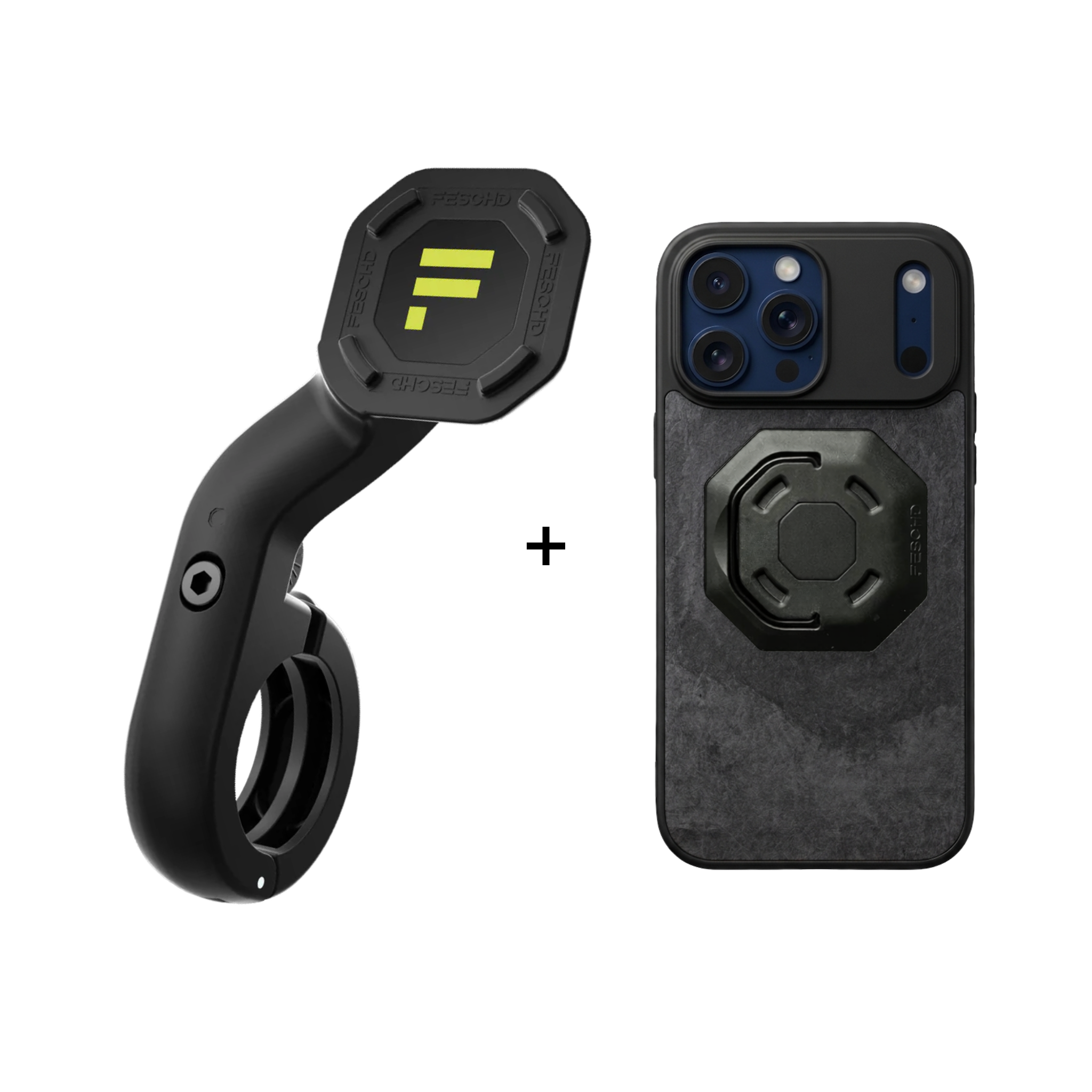
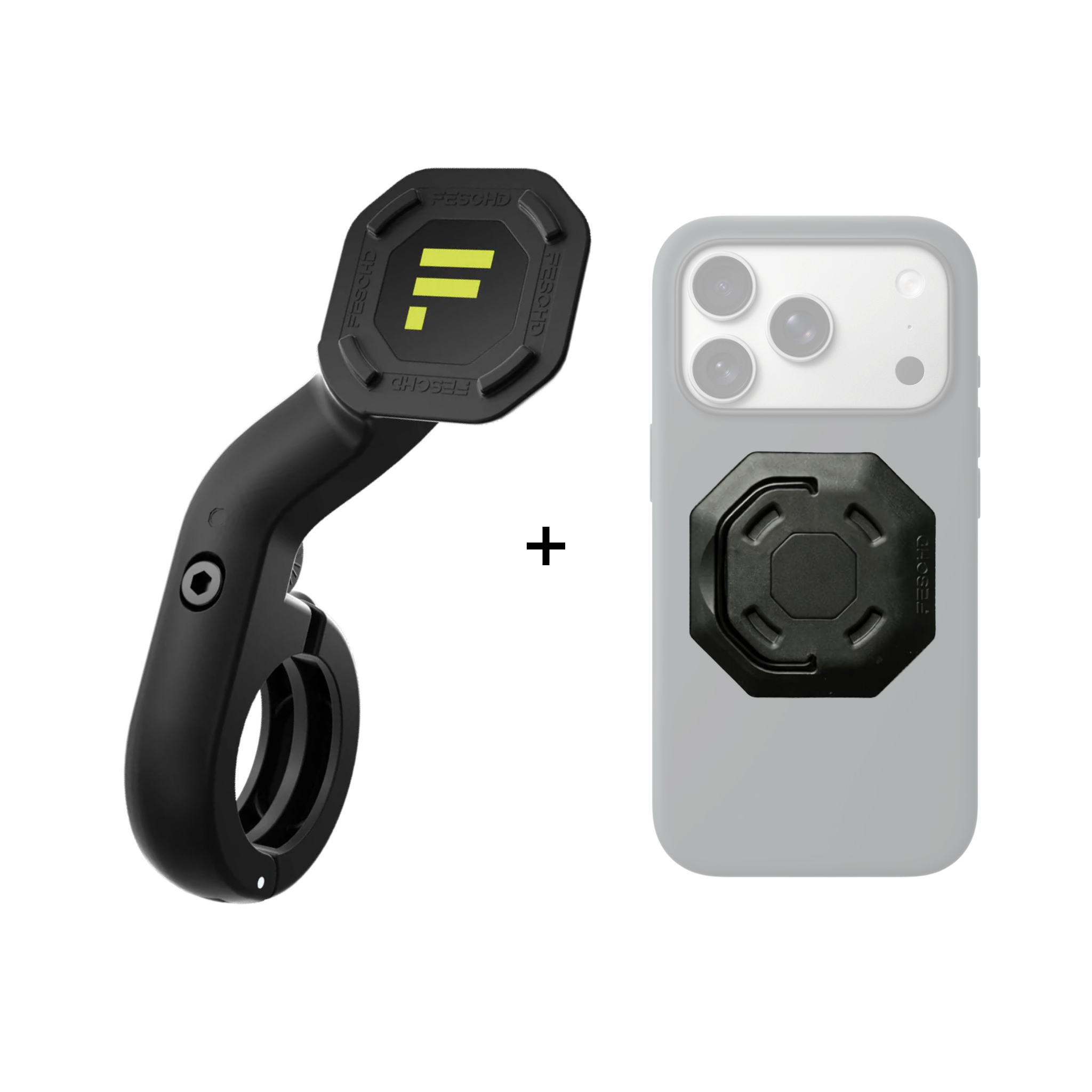
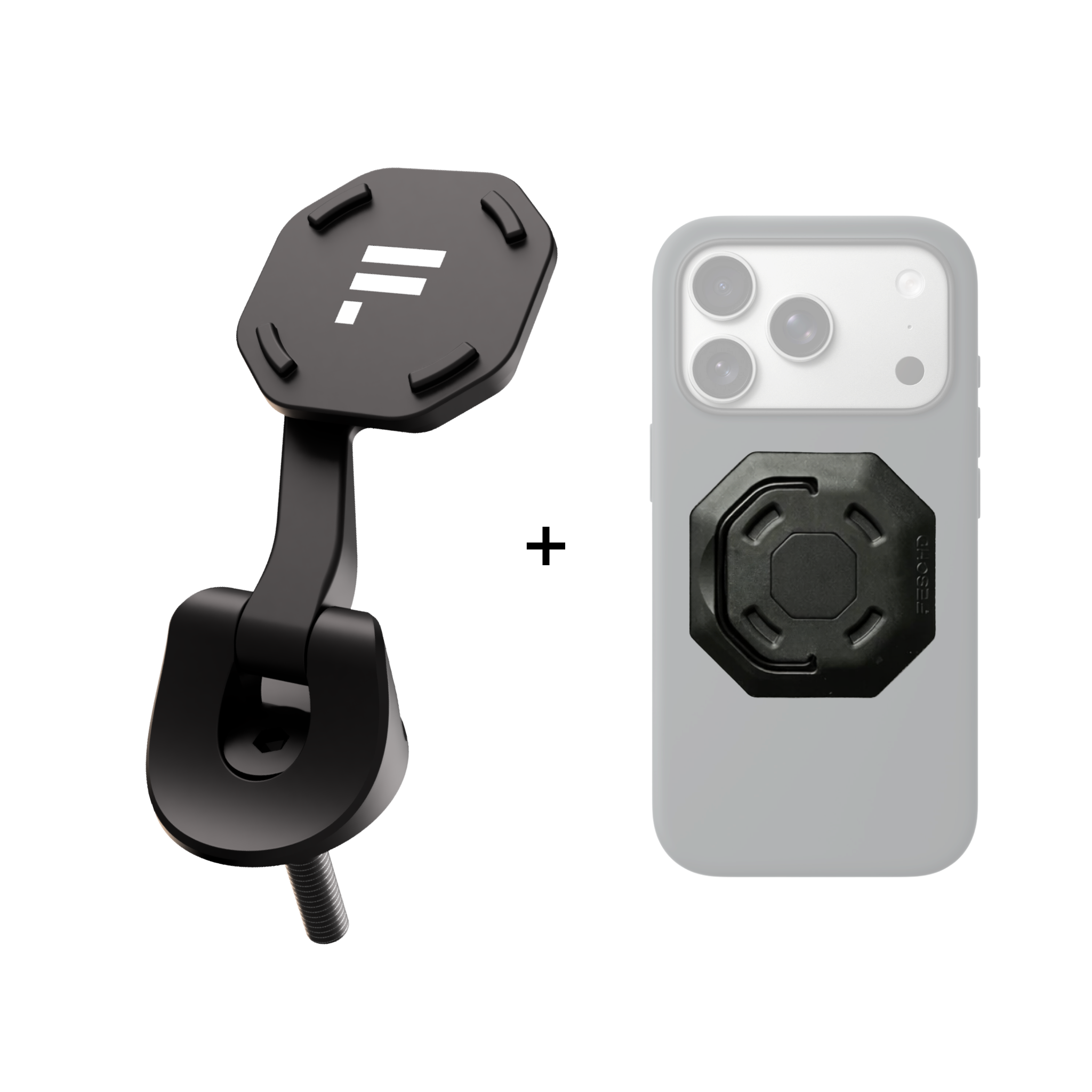
FESCHD is the best phone holder in the world because: you simply click your phone onto the holder and it locks itself in place. The magnetic closure, combined with the mechanical locking mechanism using a wire clip, makes the whole process extremely quick and secure. Plus, it's an incredibly thin system, adding barely any bulk to your phone at just 2.5 millimeters, making it super slim and perfect for everyday use. With the integrated finger ring, stand, and magnetic mount, we also offer significant added value in daily life. This means there's no need to fumble around with our holder; with a single click, your phone is FESCHD in place: it works quickly and reliably, and it's stable and robust. Furthermore, each case is a unique piece of nature, thanks to the natural stone's unique grain and design.
Were there any technical or production-related hurdles that were particularly challenging for you?
It was a huge step for us to start with 3D printing. We began with small batches of 3D-printed phone holders, and when we received customer feedback, we were able to incorporate it directly. With each subsequent 3D print run, the phone holders were optimized. This allowed us to iteratively improve the phone holder continuously. From a production standpoint, using recycled plastics was quite a challenge. Injection molding in Germany is very expensive. These tools are very complex and can easily cost €50,000-€100,000, which we obviously didn't have at the beginning of our company. Finding a German manufacturer was actually our biggest difficulty. Ultimately, we were able to secure one through a trade fair collaboration and a partnership with a company that essentially provided us with the injection mold. You can imagine it like a cake tin into which the plastic is injected. However, manufacturing this mold is considerably more complex and less expensive than a cake tin. It is very complex, and that was actually one of the biggest hurdles: getting the design right so that it can be injection molded and manufactured in Germany.
Entrepreneurship & Tips for Founders:
What skills do you think someone should have if they want to launch their own product on the market?
For me, my expertise lay in knowing how to design and develop products. Someone else might have the expertise in selling or marketing a product. Someone else might have the expertise in managing finances. And I think that once you have the enthusiasm and enjoyment, and your own idea, it's more about finding others who can work with you and perhaps complement you in the areas where you lack the expertise.
What was the biggest surprise – something you only learned about starting a business through doing it ?
The fact that I constantly have to reinvent the wheel and essentially start from scratch every day, rethinking everything. At first, I thought you do it once, then it's all set up, and then the business is founded and done, but you actually face new challenges every single day. You always reach a point where you have to reinvent yourself. That surprised me.
How do you deal with setbacks or criticism?
I'd say everyone who starts something new or of their own experiences setbacks, and everyone who brings something new to market receives criticism. Ultimately, I believe you can use that to your advantage, and there's a grain of truth in every criticism. Then you implement the criticism and see how you can improve. After setbacks, you get back up, pick yourself up, and start again. I think that's the best approach.
What advice would you give to someone who has a product idea but doesn't know where to start?
Make the whole thing as tangible as possible at the beginning, for example with a prototype, because it's difficult to simply sell or explain an idea to someone. But if you give someone something tangible, make it experiential, or perceptible, then it becomes much easier to convey an idea. This way, you yourself gradually develop a better feel for the whole thing and gain experience. And yes, just like someone who might become a writer might simply write every day or meet other writers in a café, I would also say that you simply surround yourself with these people. Yes, join forces in the respective field and surround yourself with like-minded and creative individuals.
And finally: Where do you see FESCHD in five years – what is your vision?
In five years, FESCHD will be available throughout Europe, or even worldwide, and we'll be growing with an ever-expanding community. Our product will continue to evolve, offering more and more exciting applications that extend far beyond bicycles. I also hope for a significant impact, which has already enabled us to finance many bicycles. Furthermore, I envision a fantastic team here in Giessen, comprised of people who enjoy coming to work and have fun building an idea together. And finally, I hope to continue inspiring enthusiasm for cycling and the cycling lifestyle, and to keep the passion for what we do alive!
Thank you so much for the fascinating interview!





Leave a comment
This site is protected by hCaptcha and the hCaptcha Privacy Policy and Terms of Service apply.